

GMP Latanoprost quality depends on controlled manufacturing processes, qualified equipment, trained personnel and effective quality management systems. Good Manufacturing Practice (GMP) provides a structured framework for maintaining consistent API quality throughout pharmaceutical production.
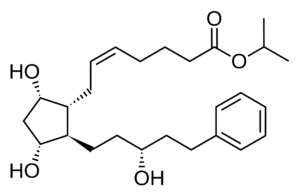
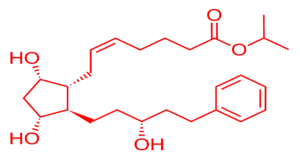
Latanoprost is a prostaglandin F2α analogue used in ophthalmic medicines for glaucoma and ocular hypertension. Its chemical characteristics require appropriate controls during manufacturing, testing, handling and storage.
Pharmaceutical manufacturers must carefully evaluate API quality because the active ingredient contributes directly to the safety, quality and performance of the finished medicinal product.
Understanding GMP principles helps pharmaceutical development teams evaluate manufacturing controls, identify potential quality risks and establish suitable quality assurance procedures.
This article explains how GMP practices support Latanoprost API manufacturing, including process control, contamination prevention, equipment qualification and batch release.
1. What Is GMP in Latanoprost API Manufacturing?
Good Manufacturing Practice (GMP) establishes requirements for manufacturing and controlling pharmaceutical materials according to defined quality standards.
For active pharmaceutical ingredients, ICH Q7 provides internationally recognised guidance on GMP principles.
The framework covers manufacturing operations, quality management, personnel, facilities, equipment, documentation and laboratory controls.
Key GMP Principles
- Establishing a documented quality management system
- Qualifying raw materials and manufacturing equipment
- Controlling critical manufacturing operations
- Maintaining accurate production records
- Preventing contamination and material mix-ups
- Investigating deviations and quality concerns
- Applying appropriate testing and batch-release procedures
GMP principles help manufacturers maintain consistent quality across production batches.
However, GMP certification alone does not guarantee that every batch meets its specifications. Manufacturers must demonstrate compliance through effective operations, testing, documentation and quality oversight.
2. Why GMP Matters for Latanoprost API Quality
Latanoprost manufacturers must control factors that could affect the identity, purity and consistency of the API.
The manufacturing process may involve chemical transformations, purification stages and controlled handling procedures.
Without appropriate process controls, variations in raw materials, equipment performance or manufacturing conditions can affect the final API.
Important Quality Risks
| Quality Risk | GMP Control Approach |
|---|---|
| Raw material variability | Supplier qualification and material testing |
| Process inconsistency | Defined manufacturing procedures and process controls |
| Cross-contamination | Cleaning procedures and contamination prevention |
| Equipment-related variation | Qualification, calibration and maintenance |
| Documentation errors | Controlled records and data-integrity practices |
| Unexpected process deviations | Investigation and corrective actions |
| Inconsistent batch quality | Quality-control testing and independent quality review |
Manufacturers should identify relevant risks and establish controls appropriate to the manufacturing process.
For a better understanding of the API’s physicochemical characteristics, explore our Latanoprost Structure, Properties and Safety guide.
3. Raw Material Qualification and Manufacturing Controls
Raw material quality influences the consistency of pharmaceutical API manufacturing.
Manufacturers should establish suitable procedures for selecting, receiving, testing and approving materials used during production.
Raw Material Qualification
Quality teams should:
- Evaluate material suppliers.
- Establish appropriate raw material specifications.
- Verify material identity.
- Review relevant quality documentation.
- Maintain material traceability.
- Control material storage and handling.
Manufacturing Process Controls
Manufacturing teams should identify critical process parameters and monitor them according to established procedures.
Depending on the process, relevant parameters may include:
- Reaction temperature
- Reaction time
- Material addition sequence
- Mixing conditions
- Purification parameters
- Intermediate quality attributes
These controls help manufacturers detect process variation and maintain reproducible operations.
For additional information on evaluating manufacturing sources, read our Latanoprost API Manufacturers in India article.
4. Process Validation and Equipment Qualification
Process validation provides documented evidence that a manufacturing process can consistently produce material meeting predetermined quality requirements.
Manufacturers should establish a validation strategy appropriate to the process, development stage and applicable regulatory expectations.
Process Validation Activities
| Activity | Purpose |
|---|---|
| Process evaluation | Identifies relevant manufacturing parameters |
| Process qualification | Demonstrates process capability under defined conditions |
| In-process monitoring | Tracks important manufacturing variables |
| Continued process verification | Evaluates ongoing process performance |
| Change control | Assesses proposed manufacturing changes |
Equipment Qualification
Manufacturing equipment should operate within defined performance requirements.
Relevant activities may include:
- Installation qualification
- Operational qualification
- Performance qualification, where applicable
- Calibration
- Preventive maintenance
- Equipment cleaning verification
Qualified equipment and controlled processes support reliable manufacturing performance.
5. Contamination Prevention and Facility Controls
Contamination prevention is an essential component of pharmaceutical API manufacturing.
Manufacturers must evaluate the risks associated with their materials, equipment, personnel and manufacturing environment.
Important Facility Controls
- Appropriate facility design
- Defined material and personnel movement
- Equipment cleaning procedures
- Prevention of cross-contamination
- Environmental controls where necessary
- Personnel hygiene and training
- Suitable material storage arrangements
The required level of environmental control depends on the manufacturing process and the stage of production.
Although manufacturers use Latanoprost API in sterile ophthalmic products, this does not automatically mean that every API manufacturing operation requires an ISO 7 or ISO 8 cleanroom.
Manufacturers should establish facility controls through documented risk assessment and applicable GMP requirements.
6. Quality Control and Batch Release
Quality-control testing helps manufacturers determine whether each API batch meets its approved specifications.
A suitable control strategy includes relevant analytical procedures, defined acceptance criteria and appropriate laboratory practices.
Quality-Control Activities
Manufacturers may perform:
- Identification testing
- Assay determination
- Related-substance analysis
- Residual solvent testing
- Water-content determination
- Other tests required by the applicable specification
Quality teams should use appropriately validated or qualified analytical methods.
Batch Release Review
Before releasing an API batch, the responsible quality unit should review relevant manufacturing and quality records.
The review may include:
- Completed batch manufacturing records
- In-process control results
- Final analytical results
- Deviations and investigations
- Applicable change-control records
- Compliance with approved specifications
This review supports documented batch disposition decisions.
For a detailed explanation of analytical specifications and batch documentation, read our Latanoprost API COA and Regulatory Certifications guide.
7. Documentation, Data Integrity and Change Control
Reliable documentation helps manufacturers demonstrate that they follow approved manufacturing procedures and maintain appropriate quality oversight.
GMP requires manufacturers to establish procedures for creating, reviewing, approving and retaining relevant records.
Essential Documentation Controls
| Control | Purpose |
|---|---|
| Standard operating procedures | Define approved working methods |
| Batch manufacturing records | Document production activities |
| Laboratory records | Support analytical results |
| Training records | Demonstrate personnel qualification |
| Deviation reports | Record and investigate unexpected events |
| CAPA records | Document corrective and preventive actions |
| Change-control records | Evaluate proposed modifications |
| Equipment records | Track qualification, maintenance and calibration |
Data Integrity
Manufacturers should maintain records that are attributable, legible, contemporaneous, original and accurate, alongside other applicable data-integrity principles.
Effective documentation supports traceability, investigations and regulatory inspections.
Change Control
Manufacturing changes may affect API quality.
Therefore, quality teams should evaluate proposed changes to materials, processes, equipment, analytical methods or manufacturing locations before implementation.
The evaluation should consider potential effects on product quality and regulatory commitments.
8. GMP Controls for Storage and Material Handling
Manufacturers must maintain suitable conditions during API storage, internal movement and packaging operations.
For Latanoprost, quality teams should establish handling requirements using the approved material specification and supporting stability data.
Important controls may include:
- Defined storage conditions
- Appropriate packaging materials
- Material identification and status labelling
- Controlled access to storage areas
- Temperature-monitoring procedures
- Documented handling of deviations
Manufacturers should also assess how material movement and packaging operations affect product quality.
Our Latanoprost API Storage, Stability and Packaging Guide explains these considerations in greater detail.
9. GMP Quality Management and Continuous Improvement
GMP compliance requires ongoing attention rather than a one-time certification exercise.
Manufacturers should regularly evaluate quality performance and address identified weaknesses.
Important Quality Management Activities
- Internal quality audits
- Supplier qualification and monitoring
- Deviation investigations
- Corrective and preventive actions
- Product quality reviews
- Employee training
- Change management
- Quality risk assessments
These activities help manufacturers identify recurring issues and improve manufacturing consistency.
Quality assurance teams should also assess whether existing procedures remain suitable as manufacturing operations evolve.
10. GMP Considerations for Pharmaceutical Customers
Pharmaceutical customers should evaluate the manufacturing controls and quality systems relevant to their intended application.
Supplier qualification involves more than checking whether a certificate exists.
Key Evaluation Questions
| Evaluation Area | Question |
|---|---|
| Manufacturing site | Does the quality documentation cover the relevant site and activities? |
| Quality system | Does the manufacturer maintain appropriate GMP procedures? |
| Process controls | Has the manufacturer established suitable production controls? |
| Laboratory testing | Does the API meet agreed quality specifications? |
| Traceability | Can the manufacturer trace materials and production batches? |
| Change management | How does the manufacturer communicate significant changes? |
| Quality investigations | How does the manufacturer manage deviations and complaints? |
Customers should evaluate these factors according to their own supplier qualification procedures and regulatory responsibilities.
For practical procurement guidance, explore our Common Latanoprost API Sourcing Mistakes article.
Customers who need further guidance on assessing API sources can also review our Latanoprost API Supplier Selection Guide.
11. Chemignition Laboratory’s Approach to API Quality
Chemignition Laboratory manufactures and supplies specialised pharmaceutical ingredients, including Latanoprost API, for pharmaceutical development and manufacturing applications.
Our operations are supported by GMP-certified manufacturing and an ISO 9001:2015-certified quality management system.
We recognise the importance of controlled manufacturing practices, quality documentation and technical communication throughout pharmaceutical supply.
Our team works with customers to understand their product requirements and respond to relevant technical and quality enquiries.
For product specifications and commercial enquiries, visit our Latanoprost API product page.
Conclusion
Maintaining GMP Latanoprost quality requires a systematic approach to pharmaceutical manufacturing.
Manufacturers must control raw materials, production processes, equipment, contamination risks, analytical testing and documentation throughout the API lifecycle.
GMP principles support manufacturing consistency, traceability and continuous quality improvement.
For pharmaceutical customers, understanding these controls helps establish suitable supplier qualification and quality evaluation procedures.
Chemignition Laboratory supports pharmaceutical customers with specialised API manufacturing, technical enquiries and product documentation.
Looking for technical information about Latanoprost API?
Contact Chemignition Laboratory to discuss product specifications and documentation requirements.
FAQs
What does GMP certification mean for Latanoprost API quality?
GMP certification ensures that Latanoprost API is manufactured under strict quality systems, covering cleanroom controls, validated processes, impurity testing, documentation, and regulatory compliance. It guarantees consistency and safety, especially for ophthalmic formulations.
Why is GMP important specifically for Latanoprost API?
Latanoprost is used in sterile eye drops, so it must meet the highest quality and purity standards. GMP guidelines prevent contamination, ensure assay consistency, and reduce regulatory risks when submitting to agencies like the FDA or EMA.
Does GMP certification impact regulatory approval?
Yes. APIs without GMP certification are often rejected during audits or dossier review. Regulatory agencies require evidence of GMP to approve the use of Latanoprost in pharmaceutical products.
How does packaging relate to GMP Latanoprost quality?
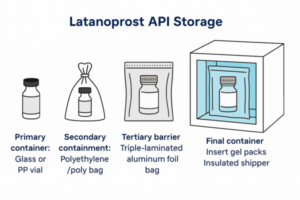
GMP-certified packaging protects Latanoprost from degradation. It involves storing the API in PP/glass vials, sealing them in poly bags and aluminum foil, and transporting them with cold chain logistics to maintain potency and shelf life.
What documents confirm GMP Latanoprost quality?
Key documents include the GMP certificate, CoA (Certificate of Analysis), DMF (Drug Master File), ASMF (for EU), impurity profile, MSDS, and validated stability data.
How do manufacturers prevent contamination during API production?
Manufacturers use suitable facility controls, equipment cleaning procedures, personnel training, material handling practices and risk-based contamination prevention measures.