

Latanoprost API storage is essential for maintaining the chemical stability, quality and suitability of this specialized pharmaceutical ingredient.
Latanoprost API is a synthetic prostaglandin analogue widely used in ophthalmic formulations for glaucoma and ocular hypertension. As a temperature-sensitive pharmaceutical ingredient, it requires controlled storage, protective packaging and appropriate transportation.
For pharmaceutical manufacturers, maintaining suitable storage conditions helps minimise degradation risks and supports consistent product quality.
Chemignition Laboratory, an ISO 9001:2015-certified company with GMP-certified manufacturing capabilities, supplies Latanoprost API with documented stability information, protective packaging and validated cold-chain logistics.
This guide explains Latanoprost API storage conditions, shelf life, packaging requirements, transportation practices and quality assurance considerations.
Explore a leading manufacturer of APIs.
With over 10 years of expertise, we ensure GMP compliance and provide reliable, high-quality solutions.
1. Why Latanoprost API Storage Conditions Matter
Latanoprost is sensitive to environmental conditions that may affect its chemical stability and impurity profile.
Therefore, pharmaceutical manufacturers must consider several factors during storage and handling.
Factors Affecting Latanoprost API Stability
- Light exposure: May contribute to photochemical degradation.
- Oxygen exposure: Can increase the risk of oxidative degradation.
- Moisture exposure: May contribute to hydrolytic degradation under certain conditions.
- Elevated temperatures: Can accelerate chemical degradation.
- Temperature fluctuations: May affect material stability during storage and transportation.
However, the extent of degradation depends on the duration of exposure, packaging configuration and product-specific stability characteristics.
Appropriate storage conditions help protect Latanoprost API quality throughout its intended shelf life.
2. Recommended Latanoprost API Storage Temperature
Temperature control is an important consideration for long-term Latanoprost API storage.
Chemignition Laboratory specifies the following conditions for its Latanoprost API.
| Storage Parameter | Recommended Condition |
|---|---|
| Long-term storage temperature | −20°C to −10°C |
| Short-term transportation | 2°C to 8°C for up to 7 days, where validated |
| Light protection | Protect from direct light |
| Container condition | Keep tightly sealed |
| Moisture protection | Store in suitable moisture-resistant packaging |
| Temperature fluctuations | Avoid unnecessary temperature changes |
These conditions should be followed in accordance with the current approved product specification, storage label and supporting stability data.
Important Storage Precautions
To maintain appropriate Latanoprost API storage conditions:
- Maintain the specified long-term storage temperature.
- Keep the primary container tightly closed.
- Protect the material from direct light.
- Minimise exposure to moisture and ambient air.
- Avoid unnecessary temperature fluctuations.
- Follow approved handling and dispensing procedures.
Furthermore, any temperature excursion should be documented and evaluated through the applicable quality management process.
3. Protective Packaging for Latanoprost API
Packaging plays an important role in protecting temperature-sensitive pharmaceutical ingredients.
Chemignition Laboratory uses a multilayer packaging approach designed to reduce exposure to light, moisture and external contamination.
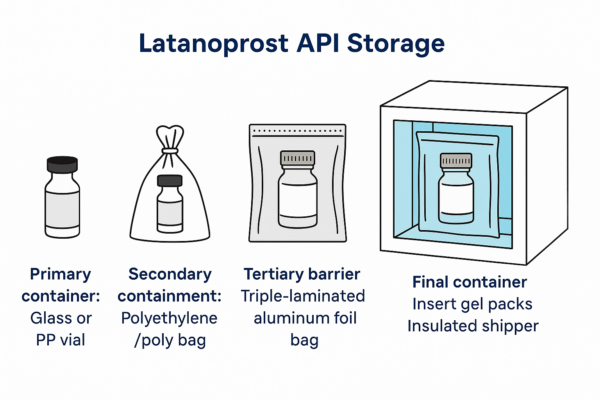
Step-by-Step Packaging Process
Step 1: Primary Container
Latanoprost API is packed in a suitable glass or polypropylene vial.
The primary container provides direct containment and helps minimise exposure to environmental conditions.
Step 2: Secondary Protection
The sealed vial is placed inside a polyethylene bag.
This provides an additional protective layer during handling and transportation.
Step 3: Aluminium Barrier Packaging
The secondary pack is placed inside a triple-laminated aluminium foil pouch.
The pouch is heat-sealed to provide additional protection against light and moisture.
Step 4: External HDPE Container
The sealed aluminium pouch is placed inside an HDPE container.
This outer container provides additional physical protection during storage and distribution.
Step 5: Product Labelling
Each pack carries relevant identification and traceability information, including:
- Product name
- Batch number
- Net quantity
- Manufacturing date
- Expiry or retest date, as applicable
- Recommended storage conditions
- Manufacturing site information
The final packaging arrangement follows the approved product specification and applicable packaging procedures.
4. Latanoprost API Shelf Life and Stability
The Latanoprost API shelf life depends on storage temperature, packaging integrity, product quality and supporting stability studies.
Chemignition Laboratory offers Latanoprost API with a documented shelf life of up to 36 months under specified storage conditions.
Latanoprost API Stability Information
| Parameter | Chemignition Laboratory Information |
|---|---|
| Documented shelf life | Up to 36 months |
| Long-term storage | −20°C to −10°C |
| Packaging | Protective multilayer packaging |
| Stability studies | Real-time and accelerated stability data |
| Photostability | Supporting information available |
| Transportation | Validated cold-chain arrangements |
The stated shelf life applies when the material is maintained under the approved storage conditions in its specified packaging.
Storage After Opening
Opening the primary container may expose the API to oxygen, moisture, light and temperature changes.
Therefore, pharmaceutical manufacturers should follow approved handling procedures and minimise unnecessary exposure.
Where supported by applicable in-use stability data, Chemignition Laboratory specifies a 30-day period after opening. This period should only be applied to the packaging and handling conditions covered by the supporting data.
Customers should refer to the current technical documentation for product-specific instructions.
5. How to Identify Possible Latanoprost API Degradation
Improper storage may affect the appearance, assay or impurity profile of Latanoprost API.
However, visual inspection alone cannot establish chemical stability.
Potential Indicators of Degradation
- Unexpected changes in appearance
- Discolouration
- Reduction in assay results
- Increased related substances
- Analytical results outside the approved specification
Recommended Quality Checks
Before formulation use, pharmaceutical manufacturers should review:
- Certificate of Analysis (CoA)
- Assay results
- Related-substance profile
- Relevant stability information
- Storage and transportation records
If a temperature excursion or packaging failure occurs, the affected batch should undergo a documented quality assessment before use.
6. Cold-Chain Shipping for Latanoprost API
Cold-chain logistics help maintain specified temperature conditions during the transportation of temperature-sensitive pharmaceutical ingredients.
Chemignition Laboratory provides validated cold-chain shipping arrangements for Latanoprost API supplied to international pharmaceutical customers.
The shipping configuration should be selected according to the approved temperature range, transportation duration and destination requirements.
Cold-Chain Logistics Requirements
| Logistics Parameter | Recommended Practice |
|---|---|
| Temperature control | Maintain the validated transportation range |
| Insulated packaging | Use qualified temperature-controlled shipping systems |
| Temperature monitoring | Use suitable temperature-monitoring devices |
| Shipping duration | Remain within the validated shipping-system duration |
| Documentation | Maintain relevant shipping and quality records |
| Temperature excursions | Investigate and assess deviations |
Depending on the approved shipping configuration, suitable refrigerant systems may be used.
Temperature Monitoring and Shipment Qualification
Temperature monitoring provides information about the conditions experienced during transportation.
In addition, shipping qualification helps establish whether a packaging system can maintain the required temperature range for its intended duration.
These controls support consistent handling and help pharmaceutical customers evaluate shipment conditions upon receipt.
7. ISO 9001:2015 and GMP Quality Assurance
Quality management systems support consistent pharmaceutical manufacturing, documentation, storage and supply operations.
Chemignition Laboratory holds ISO 9001:2015 certification, reflecting its implementation of a quality management system based on internationally recognised requirements.
What Is ISO 9001:2015?
ISO 9001 is an international standard that specifies requirements for quality management systems.
It focuses on areas such as:
- Documented processes
- Quality objectives
- Risk-based thinking
- Process monitoring
- Corrective actions
- Continual improvement
- Customer requirements
These principles help organisations maintain structured and consistent quality management practices.
How ISO 9001:2015 Supports Latanoprost API Supply
Within Chemignition Laboratory’s quality management framework, ISO 9001:2015 supports established procedures for activities such as:
Document Control
Controlled documentation supports consistent implementation of approved procedures and quality records.
Traceability
Batch identification and relevant records support material traceability throughout manufacturing and distribution.
Quality Monitoring
Defined quality processes support monitoring, review and continual improvement.
Customer Requirements
Structured communication and documented processes support the management of customer specifications and technical requirements.
GMP and ISO 9001:2015: Understanding the Difference
| Standard | Primary Focus |
|---|---|
| ISO 9001:2015 | Quality management systems and organisational processes |
| GMP | Pharmaceutical manufacturing and product quality controls |
| ICH stability guidance | Scientific evaluation of stability and storage requirements |
ISO 9001:2015 certification does not replace GMP requirements or product-specific stability validation.
Together, an effective quality management system, applicable GMP controls and appropriate stability studies support reliable pharmaceutical ingredient supply.
8. Regulatory Guidelines for Latanoprost API Stability
Pharmaceutical stability programmes should consider applicable regulatory guidance and product-specific requirements.
ICH Q1A(R2): Stability Testing
ICH Q1A(R2) describes general principles for stability testing of new drug substances and drug products.
The guidance addresses the use of stability data to establish suitable storage conditions, retest periods and shelf lives.
ICH Q1B: Photostability Testing
ICH Q1B provides guidance on evaluating the photostability of pharmaceutical substances and products.
This is relevant when assessing the potential effects of light exposure.
Good Manufacturing Practice
Applicable GMP requirements address pharmaceutical manufacturing controls, quality systems, documentation and handling procedures.
Available Quality Documentation
Depending on customer and market requirements, Chemignition Laboratory can provide relevant documentation, including:
- Certificate of Analysis
- Safety Data Sheet
- Product specifications
- Stability information
- Impurity profile
- Applicable GMP documentation
- ISO 9001:2015 certification
- Packaging and transportation information
The availability and applicability of specific documents should be confirmed for each product and destination market.
9. Why Choose Chemignition Laboratory for Latanoprost API?
Chemignition Laboratory manufactures and supplies pharmaceutical ingredients for formulation development and commercial pharmaceutical applications.
The company’s Latanoprost API offering combines documented stability, protective packaging, quality management and international supply capabilities.
Key Advantages
ISO 9001:2015-Certified Quality Management
Chemignition Laboratory maintains an ISO 9001:2015-certified quality management system supporting documented procedures and continual improvement.
GMP-Certified Manufacturing
Manufacturing operations are supported by applicable GMP certification and established pharmaceutical quality controls.
Documented 36-Month Shelf Life
Product-specific stability information supports a shelf life of up to 36 months under specified conditions.
Protective Multilayer Packaging
Packaging arrangements help protect the API against environmental exposure during storage and transportation.
Validated Cold-Chain Logistics
Temperature-controlled shipping arrangements support international pharmaceutical ingredient supply.
Technical and Regulatory Documentation
Relevant documentation includes CoA, SDS, impurity information, stability records and applicable quality certificates.
International Supply Capabilities
Chemignition Laboratory supports pharmaceutical customers with technical communication, commercial quotations and international supply arrangements.
For product information, visit our Latanoprost API product page.
Conclusion
Appropriate Latanoprost API storage is essential for maintaining the quality and stability of this specialised ophthalmic ingredient.
Temperature control, protective packaging, light protection and validated transportation help minimise degradation risks throughout the product lifecycle.
Chemignition Laboratory combines ISO 9001:2015-certified quality management, GMP-certified manufacturing, documented 36-month stability and cold-chain logistics to support pharmaceutical customers.
By following approved storage conditions and established quality procedures, manufacturers can support consistent material handling and reliable API procurement.
Looking for Latanoprost API with Documented Stability?
Explore Latanoprost API from Chemignition Laboratory or contact our team to request product specifications, stability documentation, packaging information and commercial quotations.
FAQs
What is the recommended Latanoprost API storage temperature?
Chemignition Laboratory specifies −20°C to −10°C for long-term storage of its Latanoprost API. Customers should follow the approved product-specific storage instructions.
What is the shelf life of Latanoprost API?
Chemignition Laboratory offers Latanoprost API with a documented shelf life of up to 36 months under specified storage conditions.
Does Latanoprost API require cold-chain shipping?
Temperature-controlled shipping may be required to maintain validated transportation conditions. Chemignition Laboratory provides cold-chain arrangements for its Latanoprost API.
Why should Latanoprost API be protected from light?
Light exposure may contribute to chemical degradation. Suitable packaging and storage conditions help minimise this risk.
What packaging is used for Latanoprost API?
Chemignition Laboratory uses a multilayer packaging arrangement comprising a primary vial, polyethylene protection, an aluminium barrier pouch and an external HDPE container.
Is Chemignition Laboratory ISO 9001:2015 certified?
Yes. Chemignition Laboratory holds ISO 9001:2015 certification for its quality management system. The certification scope should be checked against the current certificate.
What is the difference between ISO 9001:2015 and GMP?
ISO 9001:2015 specifies requirements for a quality management system, while GMP establishes requirements for pharmaceutical manufacturing and product quality controls. ISO certification does not replace GMP compliance.
Can Latanoprost API be transported at 2°C to 8°C?
Chemignition Laboratory identifies 2°C to 8°C for up to seven days as a possible short-term transportation condition where supported by validated data.
What happens if Latanoprost API is exposed to unsuitable temperatures?
A temperature excursion may affect product stability. The material should undergo a documented quality assessment before use.
What documentation is available for Latanoprost API?
Relevant documentation may include a CoA, SDS, product specifications, impurity profile, stability information, ISO 9001:2015 certification and applicable GMP records.