

Sodium Acetate is commonly available in two forms: Sodium Acetate Anhydrous (CH₃COONa) and Sodium Acetate Trihydrate (CH₃COONa·3H₂O). The main difference is their water of crystallisation, which affects molecular weight, physical properties, handling and suitability for different applications.
This article compares Sodium Acetate Anhydrous vs Trihydrate, including their formulas, molecular weights, properties, uses, storage and key differences.
What is Sodium Acetate?
Sodium Acetate is commonly available in two forms: Sodium Acetate Anhydrous and Sodium Acetate Trihydrate. To understand the compound’s general formula, structure and properties, read our complete guide to Sodium Acetate.
Explore a leading manufacturer of APIs.
With over 10 years of expertise, we ensure GMP compliance and provide reliable, high-quality solutions.
What is Sodium Acetate Anhydrous?
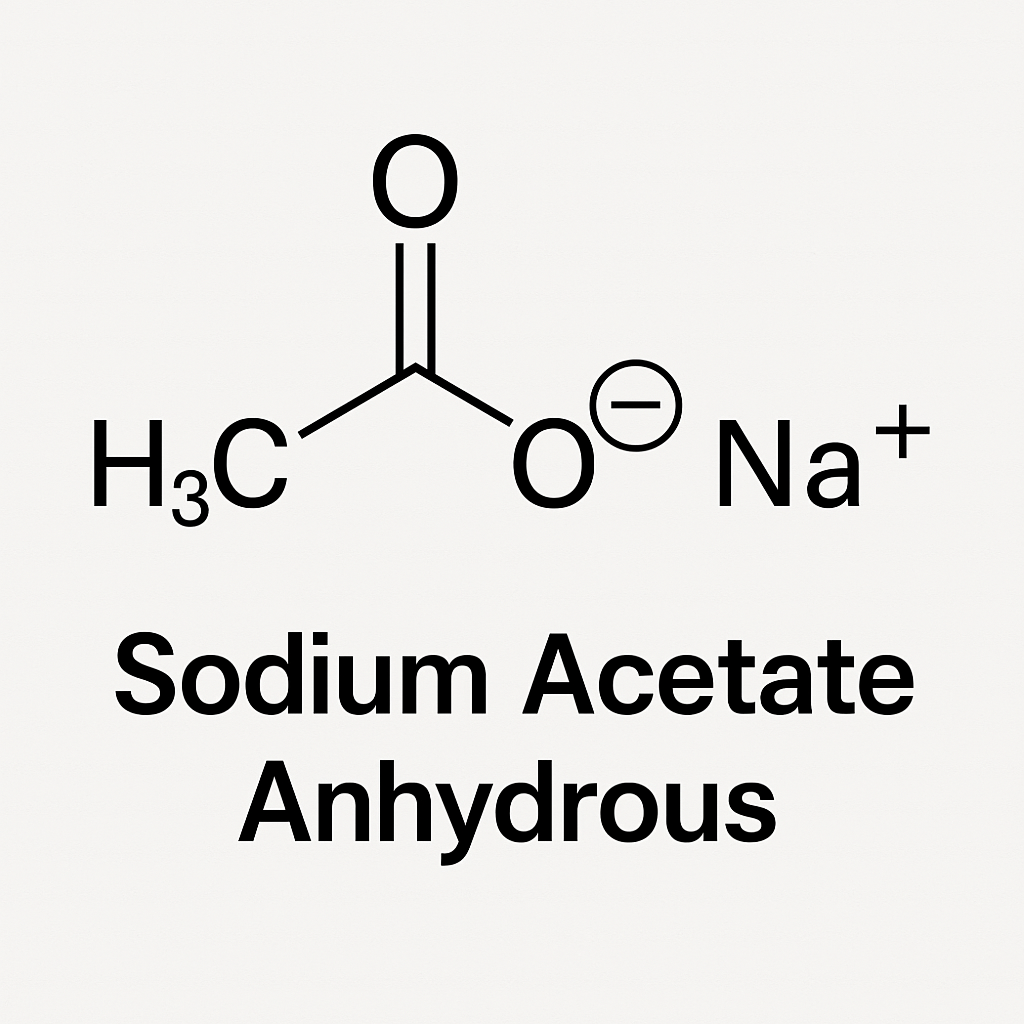
Sodium Acetate Anhydrous is the water-free crystalline form of Sodium Acetate, represented by the formula CH₃COONa. Unlike the trihydrate, it contains no water of crystallisation.
Key Features:
- Formula: CH₃COONa
- Molecular Formula: C₂H₃NaO₂
- Molecular Weight: 82.03 g/mol
- CAS No.: 127-09-3
- Appearance: White crystalline powder or crystals
- Water of Crystallisation: None
- Solubility: Very soluble in water
- Nature: Hygroscopic
Chemignition Laboratory supplies Sodium Acetate Anhydrous for pharmaceutical and industrial requirements.
What is Sodium Acetate Trihydrate?
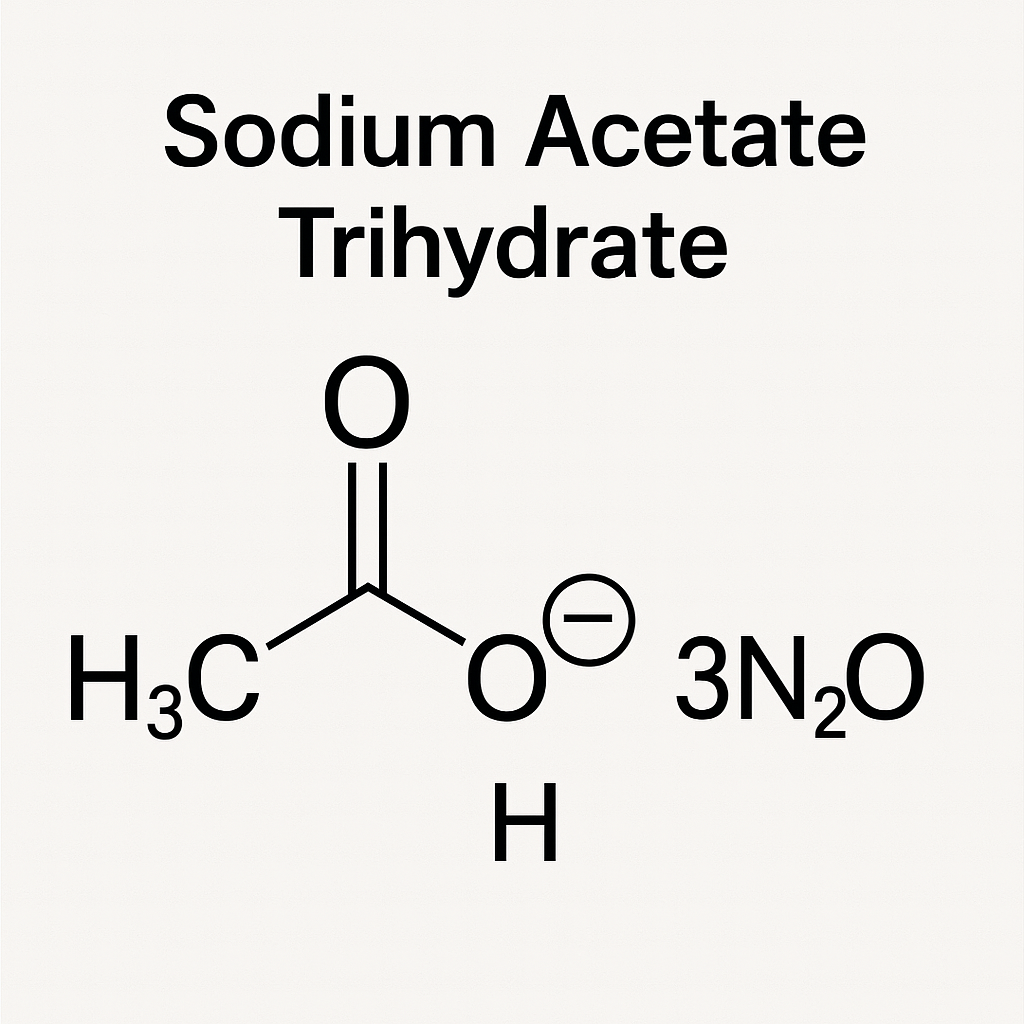
Sodium Acetate Trihydrate is the hydrated form of Sodium Acetate containing three molecules of water of crystallisation for each Sodium Acetate unit. Its chemical formula is CH₃COONa·3H₂O.
Key Features:
- Formula: CH₃COONa·3H₂O
- Molecular Weight: 136.08 g/mol
- CAS No.: 6131-90-4
- Appearance: Colourless crystals or white crystalline material
- Water of Crystallisation: Three H₂O molecules
- Solubility: Freely/very soluble in water
- Thermal behaviour: Loses water upon heating.
Sodium Acetate Trihydrate is also available for applications requiring the hydrated form.
Sodium Acetate Anhydrous vs Trihydrate: Key Differences
| Property | Sodium Acetate Anhydrous | Sodium Acetate Trihydrate |
|---|---|---|
| Chemical Formula | CH₃COONa | CH₃COONa·3H₂O |
| Molecular Weight | 82.03 g/mol | 136.08 g/mol |
| CAS No. | 127-09-3 | 6131-90-4 |
| Water of Crystallisation | None | Three H₂O molecules |
| Physical Form | White crystalline powder/crystals | Colourless or white crystals |
| Water Solubility | Very soluble | Very soluble |
| Hygroscopic Behaviour | Hygroscopic | Hydrated crystalline form |
| Typical Selection | Where controlled/low water contribution is required | Where hydrated material is suitable |
How Are Sodium Acetate Anhydrous and Trihydrate Produced?
Sodium Acetate can be produced by neutralising acetic acid with a suitable sodium-containing base. The resulting solution is concentrated and crystallised under controlled conditions.
Process and drying conditions determine whether the final material is obtained as Sodium Acetate Anhydrous or Sodium Acetate Trihydrate. Industrial manufacturing conditions vary according to the required grade and specification.
Applications of Sodium Acetate Anhydrous and Trihydrate
Sodium Acetate Anhydrous Uses
- Pharmaceutical and formulation applications where the applicable specification requires an anhydrous material.
- Laboratory reagent and buffer preparation.
- Chemical synthesis and processing.
- Food applications where an appropriate food-grade material is specified.
- Textile and other industrial processes.
Sodium Acetate Trihydrate Uses
- Reusable heat packs and thermal applications.
- Buffering and pH-control applications.
- Food applications where the appropriate grade is permitted.
- Textile dyeing and processing.
- Laboratory and industrial applications.
Both forms may be used in pharmaceutical applications depending on the formulation and applicable specification. Learn more about the pharmaceutical applications of Sodium Acetate.
How to Choose Between Anhydrous and Trihydrate
Selection should depend on the required specification, water content, formulation requirements, processing conditions and intended application. Users should evaluate the applicable pharmacopoeial, food, laboratory or industrial specification before selecting a grade.
Storage and Handling
Sodium Acetate Anhydrous
- Store in a tightly closed container.
- Protect from moisture.
- Store in a cool, dry and well-ventilated area.
Sodium Acetate Trihydrate
- Store in a tightly closed container.
- Protect from excessive heat and unsuitable storage conditions.
- Store according to the applicable product specification and MSDS.
Safety and Environmental Considerations
Sodium Acetate generally presents a relatively low environmental hazard under normal handling conditions. Users should prevent unnecessary releases and dispose of the material in accordance with applicable local regulations and the product MSDS.
Which Form Should You Use?
| Requirement/Application | General Consideration |
|---|---|
| Low water contribution | Anhydrous may be preferred |
| Heat-pack applications | Trihydrate commonly used |
| Pharmaceutical applications | Select according to formulation and pharmacopoeial specification |
| Food applications | Select an approved food-grade form according to the application |
| Laboratory applications | Select according to method/protocol |
| Textile processing | Either form may be selected according to process requirements |
| Chemical processing | Select based on water content and process specification |
Conclusion
Sodium Acetate Anhydrous and Sodium Acetate Trihydrate contain the same sodium acetate component but differ in their water of crystallisation, molecular weight and physical characteristics. Anhydrous Sodium Acetate has a molecular weight of 82.03 g/mol, while Sodium Acetate Trihydrate has a molecular weight of 136.08 g/mol.
Selecting the appropriate form depends on the required specification, water content, processing conditions and intended application.
Chemignition Laboratory manufactures and supplies Sodium Acetate Anhydrous and Sodium Acetate Trihydrate for pharmaceutical and industrial applications. Contact our team for specifications, COA, SDS, packaging and bulk supply information.
FAQs
What is Sodium Acetate Trihydrate?
Sodium Acetate Trihydrate is the hydrated form of Sodium Acetate containing three molecules of water of crystallisation. Its formula is CH₃COONa·3H₂O.
What is the formula of Sodium Acetate Trihydrate?
The chemical formula of Sodium Acetate Trihydrate is CH₃COONa·3H₂O.
What is the molecular weight of Sodium Acetate Trihydrate?
The molecular weight of Sodium Acetate Trihydrate is approximately 136.08 g/mol.
What is Sodium Acetate Anhydrous?
Sodium Acetate Anhydrous is Sodium Acetate without water of crystallisation. Its formula is CH₃COONa.
What is the molecular weight of Sodium Acetate Anhydrous?
The molecular weight of Sodium Acetate Anhydrous is approximately 82.03 g/mol.
Are Sodium Acetate and Sodium Acetate Trihydrate the same?
They contain the same sodium acetate component, but they are different forms. Sodium Acetate Trihydrate contains three molecules of water of crystallisation, while the anhydrous form contains no water of crystallisation.
What is the difference between Sodium Acetate Anhydrous and Trihydrate?
The primary difference is water of crystallisation. Anhydrous Sodium Acetate has the formula CH₃COONa and molecular weight 82.03 g/mol, while the trihydrate has the formula CH₃COONa·3H₂O and molecular weight 136.08 g/mol.
Which is better: Sodium Acetate Anhydrous or Trihydrate?
Neither form is universally better. The appropriate form depends on the required specification, water content, manufacturing process and intended application.


